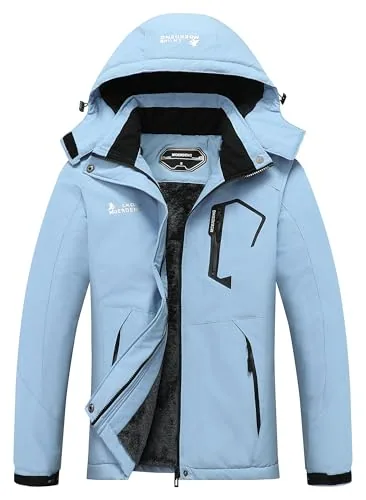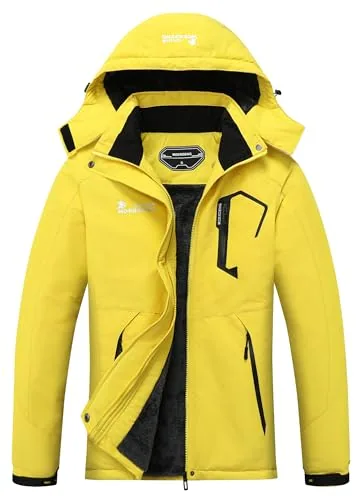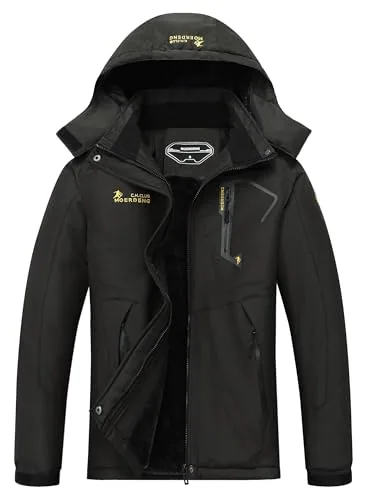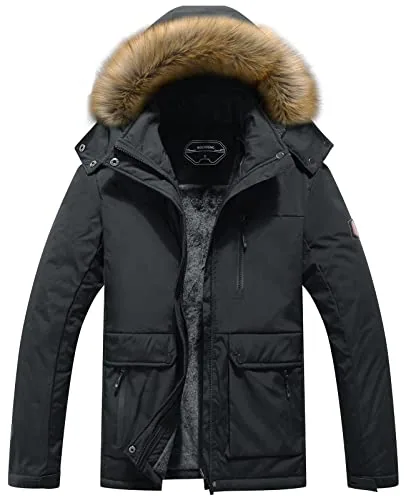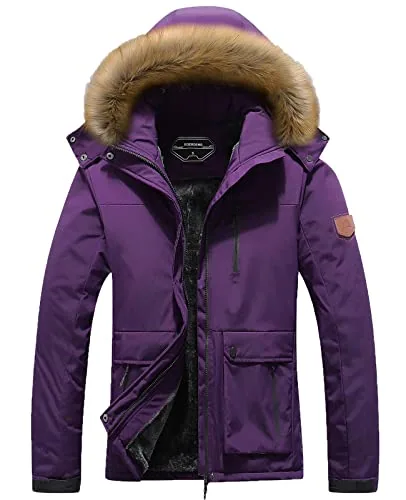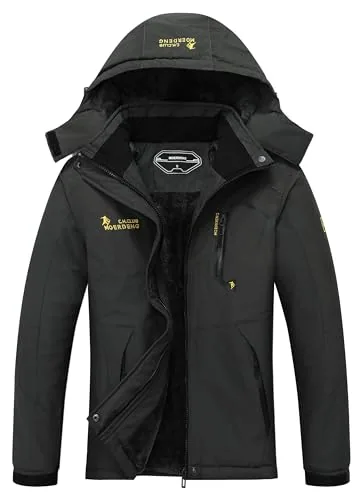
Ski Jacket, Dark Grey
4.5 out of 5 from 38,304 ratings
$19.99
ML
See the details
Before the cold
The number on the forecast is not the number on your skin. Here is what wind chill measures, quoted from the service that publishes it, how a layering system works, and where each Moerdeng bench sits inside that system by lining, cut and weight.
15 minute read · sources read 5 September 2026
4.5 out of 5 from 38,304 ratings
$19.99
4.5 out of 5 from 38,304 ratings
$19.99
4.5 out of 5 from 38,304 ratings
$19.99
4.5 out of 5 from 38,304 ratings
$19.99
Two winter days can show the same temperature and feel nothing alike. The difference is wind, and the service that publishes the forecast measures it with a second number. The National Weather Service defines that number plainly.
The wind chill temperature is how cold people and animals feel when outside. Wind chill is based on the rate of heat loss from exposed skin caused by wind and cold.
National Weather Service, Wind Chill Chart, read 5 September 2026
Read that again with the last four words in mind: from exposed skin. Wind chill describes what happens at the boundary between you and the air. A jacket changes that boundary. It does not change the weather, and it does not change the number on the forecast, but it decides how much of your skin the number applies to.
The same page draws the boundary of the index itself.
Wind chill temperature is only defined for temperatures at or below 50°F and wind speeds above 3 mph.
National Weather Service, Wind Chill Chart, read 5 September 2026
Below fifty degrees and above a light breeze, in other words. Above that, the wind still moves heat away from you, but the published index has nothing to say about it, and a chart that stops is more honest than one that guesses.
The reason the number matters for a purchase, rather than for conversation, is the second thing the page prints: the time to injury. In the worked example on the chart, zero degrees with a fifteen mile per hour wind gives a wind chill of nineteen below.
At this wind chill temperature, exposed skin can freeze in 30 minutes.
National Weather Service, Wind Chill Chart, read 5 September 2026
Thirty minutes is a bus that did not come, a walk from a far car park, a lift queue on a bad day. That is the window a hood, a cuff and a collar are built to close.
Heat leaves a body in a few ways at once, and moving air speeds up two of them. It strips the thin envelope of warm air that your body has heated and that your clothing has trapped, and it carries away moisture, which takes heat with it. A jacket that blocks wind is not doing something exotic. It is keeping that envelope in place.
This is why a thin windproof layer over a jumper can beat a thick jumper on its own, and why a jacket that feels warm in a shop can feel thin on a platform. The shop has no wind.
It is also why the fit of the openings matters more than the thickness of the body. A hem that flaps, a cuff that gapes and a collar that stands away are three doors into the warm envelope. Every jacket in this catalogue lists what it does at those three points. The counts are worth knowing: 142 of the 214 pages carry a detachable hood, 139 list cuffs that adjust or rib down, and 28 list a drawstring at the waist.
The advice that survives every winter is not about a coat at all. It is about a system. The federal occupational safety institute puts it in one line for people who work outdoors.
Wear several layers of loose clothing for better insulation.
CDC, National Institute for Occupational Safety and Health, Cold and Work, read 5 September 2026
Two words in that sentence do the work. Several, because trapped air between layers insulates better than the same thickness of one material. And loose, because a layer squashed flat by the one above it has no air left in it to trap. A jacket bought a size too small stops working as insulation long before it stops fitting.
The same page states the mechanism in equally plain words.
When temperatures drop below normal, heat can rapidly leave your body.
CDC, National Institute for Occupational Safety and Health, Cold and Work, read 5 September 2026
A working system has three parts. Next to the skin, a base layer that moves sweat away. In the middle, an insulating layer that holds warm air: fleece, wool, a light puffer. Outside, a shell that stops wind and sheds water. Some jackets combine the middle and the outside in one garment, which is what a fleece lined ski jacket is, and that is convenient until the day it is too warm, because a lining that is sewn in cannot be taken off.
Nothing in this catalogue is a base layer. Everything here is either the middle, the outside, or both at once:
The table below is counted from this catalogue at the last update. The percentages say how many pages in a bench list a fleece lining, a down fill and a long cut, and the last column is the middle weight of that bench in pounds.
| Bench | Pages | Fleece lined | Down filled | Long cut | Middle weight |
|---|---|---|---|---|---|
| Ski & Snowboard Jackets | 48 | 0% | 0% | 0% | 1.98 lb |
| Winter Coats | 44 | 0% | 0% | 0% | 1.98 lb |
| Long Down Coats | 69 | 86% | 83% | 100% | 2.65 lb |
| Puffer Jackets | 16 | 69% | 69% | 0% | 2.2 lb |
| Rain & Softshell Jackets | 21 | 0% | 0% | 0% | n/a |
| Hiking Jackets | 16 | 0% | 0% | 0% | 1.98 lb |
Two things fall out of that table. The long coats are the heaviest bench, which is what you would expect from the extra fabric, and the rain and softshell bench is the lightest by a distance, which is what makes it the packable one. The ski bench sits in the middle: enough lining to work alone in dry cold, light enough to move in.
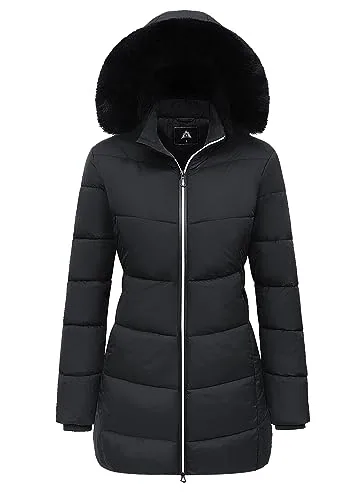
No temperature rating is published for this range, and we do not invent one. What is published, on nearly every page, is the weight of that exact size. It is a blunt instrument and a useful one: within a bench, heavier almost always means more insulation and more shell fabric.
Across the whole catalogue the spread runs from 1.98 lb to 2.65 lb, with the middle at 1.98 lb. Here are the five lightest pages and the five heaviest, so the two ends of that spread have names.
| Jacket | Size | Cut | Lining | Weight | Price |
|---|---|---|---|---|---|
| Hooded Hiking Jacket, Black | M | hip | unlined | 1.98 lb | $17.99 |
| Ski Jacket, Dark Grey | L | hip | unlined | 1.98 lb | $19.99 |
| Hooded Hiking Jacket, Black | 2XL | hip | unlined | 1.98 lb | $16.19 |
| Hooded Hiking Jacket, Pink | M | hip | unlined | 1.98 lb | $17.99 |
| Hooded Winter Coat, Black | XL | hip | unlined | 1.98 lb | $19.99 |
| Jacket | Size | Cut | Lining | Weight | Price |
|---|---|---|---|---|---|
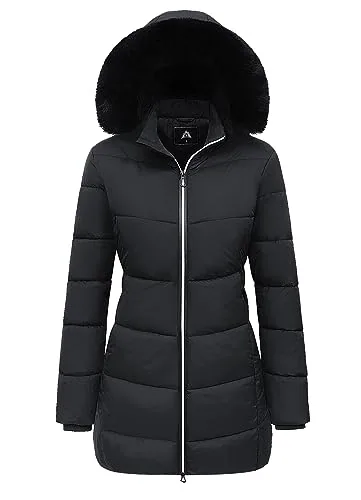
| Long Faux Fur Puffer Coat, Navy | S | long | fleece | 2.65 lb | $69.99 |
| Long Faux Fur Puffer Coat II, Black | L | long | fleece | 2.65 lb | $79.99 |
| Long Faux Fur Puffer Coat II, Black | XL | long | fleece | 2.65 lb | $79.99 |
| Long Faux Fur Puffer Coat, Black | L | long | fleece | 2.65 lb | $69.99 |
| Long Faux Fur Puffer Coat, Black | S | long | fleece | 2.65 lb | $69.99 |
A pound and a half of difference does not sound like much until you carry it over one arm through a shopping centre, or until you hang it on the back of a chair that then tips. Weight is the number that decides whether a coat gets worn on a marginal day or left at home.
The single most useful question before buying a winter jacket is whether you will be still or moving in it, because the two need opposite things.
Standing still means waiting: a platform, a touchline, a lift queue, a school gate. Your body makes almost no heat, so the jacket has to hold what there is. That argues for length, for fill, for a hood that stays up in wind, and it forgives weight, because you are not carrying it far.
Moving means walking, climbing, skiing, carrying shopping. You make a great deal of heat and, more importantly, moisture. A jacket that is too warm here is a problem rather than a comfort. You sweat into your layers, then you stop, and the wet layer cools you faster than no layer at all.
| The day | What matters most | Which bench | Roughly |
|---|---|---|---|
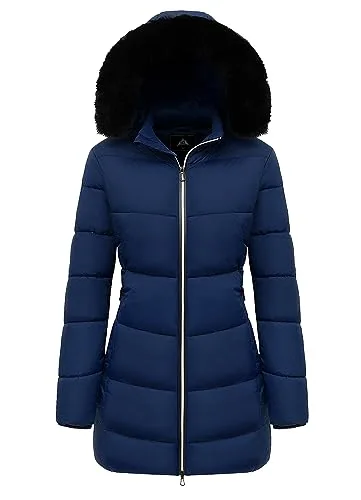
| Waiting outdoors, dry cold | length and fill | Long down coats | heaviest, warmest at rest |
| Commuting in town | hip length, hood, pockets | Winter coats | middle weight |
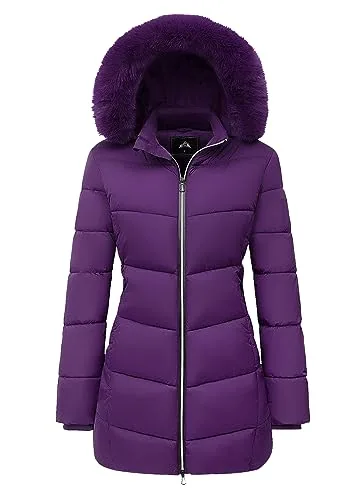
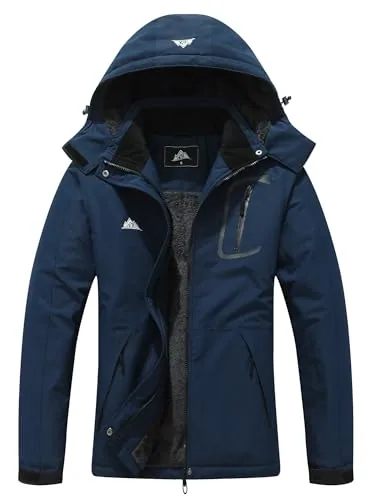
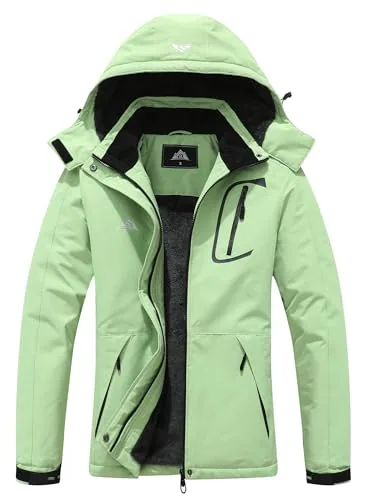
| Snow sport | shell, fleece lining, cuffs | Ski jackets | middle weight, close cut |
| Walking uphill in the cold | lining that breathes, hood | Hiking jackets | lighter |
| Shoulder season, rain | shell only, packability | Rain and softshell | lightest |
| Dry cold, layering | a middle layer that packs | Puffer jackets | light to middle |
4.5 out of 5 from 4,281 ratings
$39.99
See the details4.5 out of 5 from 4,281 ratings
$23.99
4.5 out of 5 from 4,281 ratings
$23.99
4.5 out of 5 from 4,281 ratings
$23.99
Three details decide whether a jacket keeps its warm envelope, and all three are listed on every page in this catalogue.
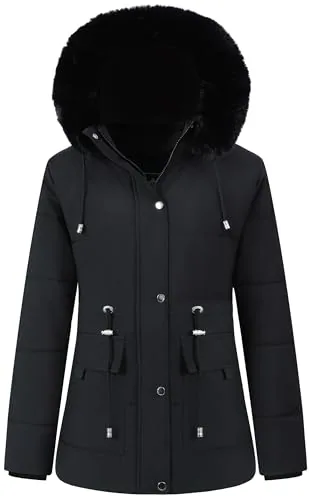
A hood that comes off is two jackets. In this range 142 pages list a detachable hood, and 70 list a faux fur trim that unclips separately, which matters if you like the trim in January and not in March. What no hood here has is a wired brim or a helmet fit, so on a ski day a helmet goes under the hood rather than the hood over the helmet.
139 pages list cuffs that adjust or rib down. This is the cheapest warmth in a jacket: a cuff that closes over the back of a glove stops the draught that runs up a sleeve every time you raise your arm. A cuff that does not close is the reason your forearms are cold while your body is warm.
28 pages list a drawstring at the waist. Pulled in, it stops the chimney effect that empties warm air out of the bottom of a coat when you walk into wind. Left loose, a long coat moves more freely. The drawstring is there so you can choose per day rather than per purchase.
Different winters ask for different answers, and the honest way to shop is to name your winter first.
Temperatures hovering around freezing, rain more often than snow, wind off the sea. Insulation matters less than a shell that sheds water and dries. Start at the rain and softshell bench, and add a fleece or a light puffer underneath rather than buying one thick coat that will be soaked by February.
Clear skies, still air, temperatures well below freezing. This is where a short puffer or a long down coat earns its keep, because loft is doing the work and there is no rain to flatten it.
Touchlines, platforms, market stalls, dog walks that involve more standing than walking. Length wins. A coat to the knee keeps wind off the back of the leg, and the extra weight costs you nothing while you are still.
Three honest limits, and none of them are secrets.
It will not add heat. A jacket slows the heat you make from leaving. If you are already cold and stationary and have made no heat for an hour, no jacket in any catalogue will warm you up. Move, eat, get inside.
It will not fix a wet layer underneath. A cotton jumper that has soaked up sweat will cool you steadily whatever is over it. This is the part the layering advice above is really about.
It will not stand in for a day of steady rain. The maker calls these jackets waterproof and windproof, and those are the maker's words. No water column figure is published for this range and no taped seams are listed, so read them as good in snow and a shower rather than as a mountain shell.
Four checks, in order, each of which takes less than a minute on a page in this catalogue.
Then check the size. These jackets run close to the body, and if a fleece is going underneath, the size above your usual one is the safer choice. The size and fit page has the detail, and every jacket page lists which sizes exist in that colour.
Every jacket page in this catalogue carries exactly four numbers, and it is worth knowing what each one is good for, because a page that carried ten numbers would be hiding these four.
It belongs to one size of one colour and to nothing else. The same jacket a size up can cost a little more, and the row of sizes links each one with its own figure. Prices come from our last update, and the date sits on the prices page.
One of six steps from Small to 3X-Large. Which steps exist for a colour is a fact about that colour, not about the jacket in general, and the row on the page shows the ones that do.
The weight of that exact size in pounds, from the maker's data. Use it to compare two jackets in the same bench, not across benches: a long coat is heavier than a shell because it is longer, which you already knew.
A rating belongs to that jacket alone. We never add ratings up across the range and never print an average of averages, because the arithmetic would flatter us and tell you nothing.
What you will not find is a temperature rating, a water column figure in millimetres or a fill weight in grams. Moerdeng does not publish them, and a number invented for a website is worse than no number at all.
Within one bench, usually. Across benches, no. A long coat at two pounds is longer, not necessarily better insulated per inch, and a light puffer can be warmer than a heavier unlined shell in dry cold.
Yes, and many people do. The trade is the cut: a ski jacket is shorter and closer than a town coat, so it is warmer on the move and leaves the top of your legs exposed while you wait.
Only when it is wet or windy. In dry cold a puffer works alone. In sleet it flattens and the loft stops working, which is exactly when a thin shell over the top earns its place in a bag.
There is no published rating, so the honest answer is a method rather than a number: match the bench to whether you are standing or moving, add layers under it, and cover the openings. On the coldest days the length and the hood matter more than the label.
These run close. If you plan on a fleece underneath, take the size above the one you wear in a coat. The size and fit page says it in more detail, and it is the single most common surprise buyers report.
4.6 out of 5 from 5,591 ratings
$39.99
See the details4.6 out of 5 from 5,591 ratings
$39.99
See the details4.5 out of 5 from 1,506 ratings
$39.99
4.5 out of 5 from 1,506 ratings
$39.99
The size you need is the one that fits over your usual winter layer. Both numbers are printed, so the comparison takes seconds.